
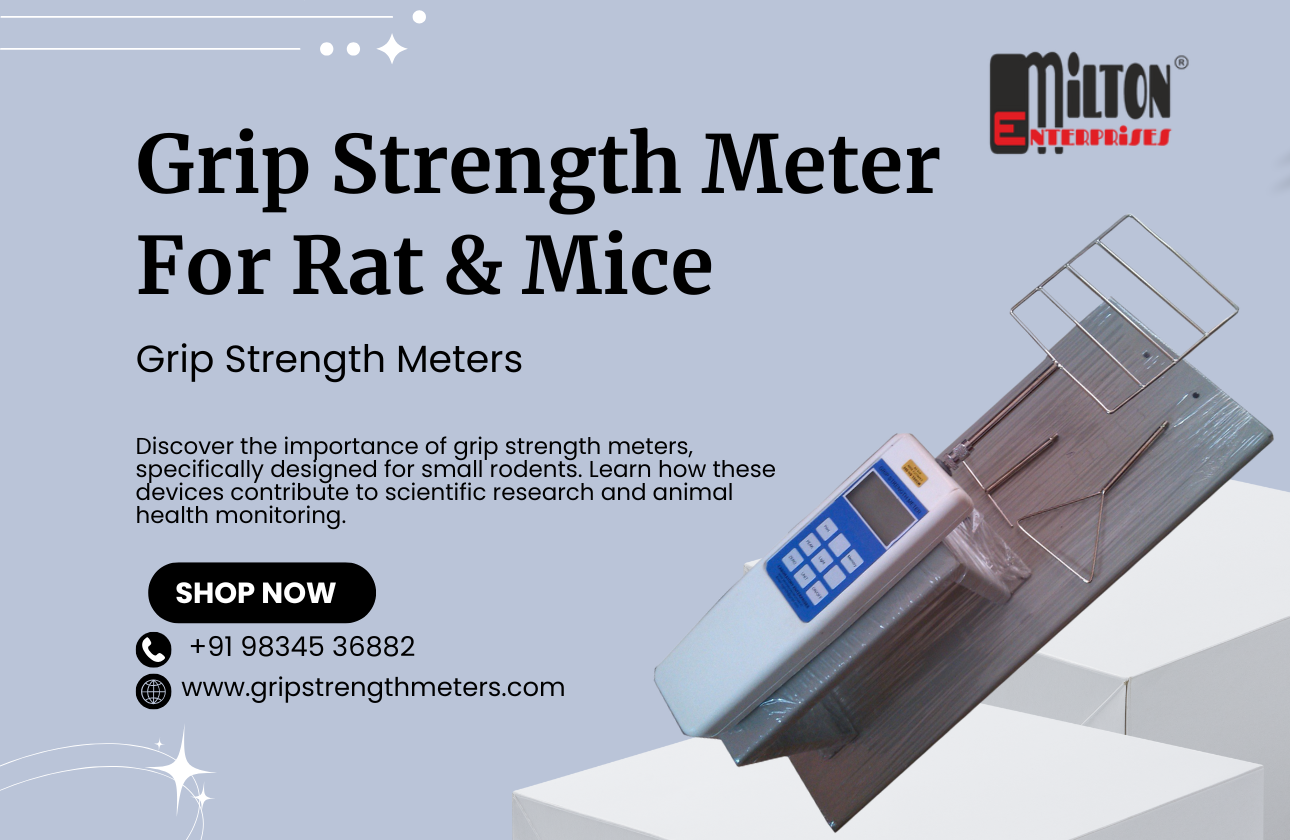
Unveiling the Power of Grip: Exploring Grip Strength Meters for Rats & Mice
In the realm of scientific research, especially in studies involving animal physiology and behavior, grip strength meters have emerged as essential tools. These devices, designed meticulously for small rodents like rats and mice, help researchers obtain valuable data about muscular function and neurological health. But what exactly makes these grip strength meters so crucial, and how do they work?
Understanding Grip Strength Meters
Grip strength meters are precision instruments that measure the force exerted by an animal when it grips onto a bar or grid. For rats and mice, these meters are specifically calibrated to accommodate their size and strength, ensuring accurate and reproducible results. The data collected offers insights into muscular and neurological health, which can be critical in studies of aging, muscular disorders, and even the effects of pharmaceuticals.
The Importance of Grip Strength in Research
Documenting Grip Strength Meter for Rat & Mice in rodents is pivotal due to its correlation with overall health. A decline in grip strength can indicate debilitation caused by diseases, genetic mutations, or environmental stresses. Through this non-invasive testing, researchers can track the progress of disease states or the efficacy of therapeutic interventions. This capability is transforming how research is conducted, providing a quantitative measure that complements observational and other experimental data.
How Grip Strength Meters Are Revolutionizing Research
1. Precision and Sensitivity: The design of Grip Strength Meter for Rat & Mice for these small animals allows for the sensitive detection of force, even subtle changes that might indicate an early onset of a disease.
2. Repeated Measures: Due to their non-invasive nature, these meters can be used regularly without causing harm to the subjects, allowing researchers to conduct longitudinal studies.
3. Versatility: These meters are adaptable to varied experimental setups, serving diverse research goals—from basic science to drug development.
The Future of Grip Strength Testing
As technology advances, the future of grip strength testing involves more sophisticated and automated devices, potentially integrating AI and machine learning to predict outcomes based on subtle variations in grip data. This foresight would further enhance the accuracy and applicability of gripstrengthmeters in research.
In conclusion, gripstrengthmeters for rats and mice are indispensable in contemporary research settings. They provide critical insights not possible through other means, allowing researchers to delve deeper into the physiological and behavioral intricacies of these animals. This small tool is indeed making a big difference in science.