
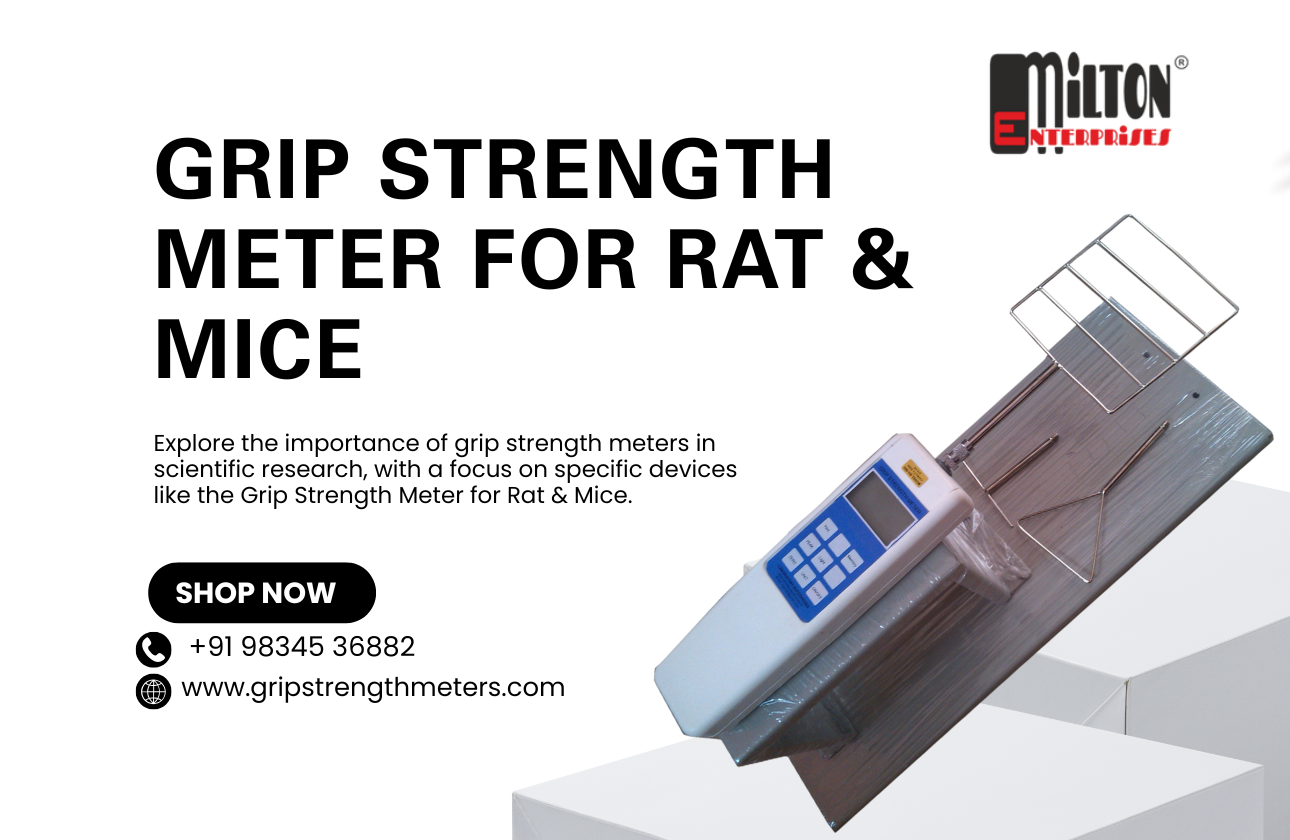
Understanding Grip Strength Meters: A Guide to Measuring Animal Grip Strength
The ability to measure grip strength is crucial in various fields of scientific research, including kinesiology, neurology, and animal physiology. Grip strength meters are valuable tools that provide precise measurements of strength and endurance in both humans and animals. This article focuses on the innovative applications and benefits of using grip strength meters, particularly the Grip Strength Meter for Rat & Mice.
What are Grip Strength Meters?
Grip strength meters are devices designed to assess the maximum force exerted by a subject's grip. Originally developed for humans, these instruments are now widely adapted for animal research, providing insights into muscular function and the effects of pharmacological treatments. By quantifying grip force, researchers can evaluate muscle fatigue, neuromuscular health, and even the impact of specific diseases.
Applications of Grip Strength Meters in Research
In scientific laboratories, grip strength meters are essential for a variety of experiments and studies. Researchers use these devices to evaluate muscle function in rodents, which serve as models for human health conditions. This is where specialized devices like the Grip Strength Meter for Rat & Mice become indispensable. These tailored instruments allow researchers to assess the effects of genetic modifications, aging, or drug treatments on muscle strength.
Grip Strength Meter for Rat & Mice: Key Features
The Grip Strength Meter for Rat & Mice is tailored specifically for small animals, offering precise measurement capabilities to capture subtle differences in strength. Some features include:
- Compact Design: Designed for easy integration into laboratory workflows.
- High Precision: Capable of detecting minute changes in grip strength with high accuracy.
- User-Friendly Interface: Simple operation to minimize handling time and stress for animals.
- Data Portability: Easily transfers data to analysis software for in-depth study.
These features make the Grip Strength Meter for Rat & Mice an invaluable tool in behavioral and physiological research settings.
Benefits of Using Grip Strength Meters
Utilizing gripstrengthmeters in research offers several advantages:
- Non-Invasive Technique: Allows for continuous assessment without harming the subject.
- Reliable Data Collection: Ensures reproducible and accurate results for robust scientific findings.
- Versatile Applications: Applicable for various studies, including genetic research and drug testing.
- Enhanced Research Efficiency: Streamlines data collection processes and increases throughput.
Conclusion
As the exploration into muscular and neuromuscular function continues to grow, the role of grip strength meters becomes increasingly important. The Grip Strength Meter for Rat & Mice offers researchers a precise, reliable, and efficient means to study these areas, making it an essential tool in the pursuit of scientific knowledge. Whether your research focuses on disease mechanisms, therapeutic interventions, or understanding fundamental physiological processes, incorporating grip strength meters can significantly enhance your study outcomes.